
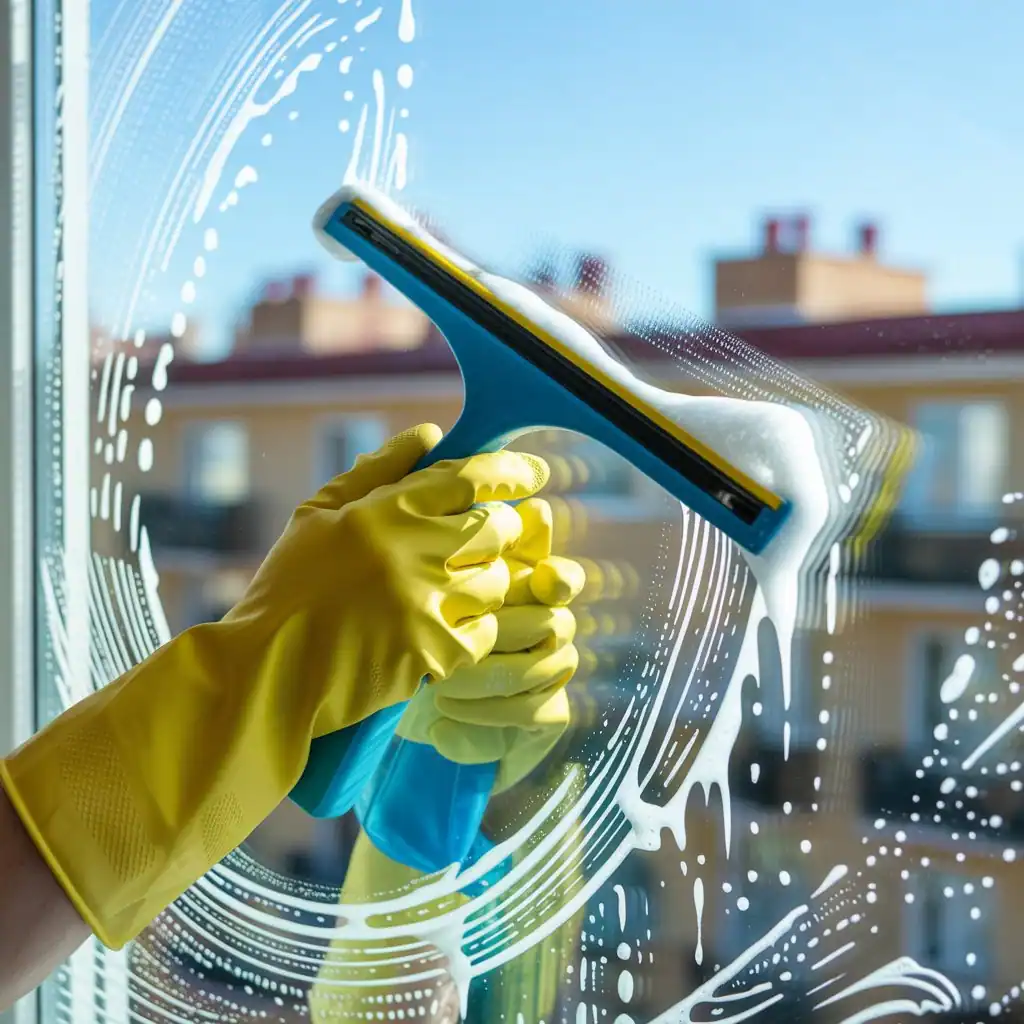
Spring is a great time to clean your windows, whether you live in a place with harsh winters or are looking for a seasonal refresh. But window cleaning isn’t quite as straightforward as just spraying and wiping, so we turned to a pro to find out his top tips.
Along with advice on window-cleaning necessities, we were also eager to learn some important methods worth considering when it comes to chasing that streak-free shine.
What Is the Best Window Cleaner?
Before you get started, it’s a good idea to compile your tools. According to professional window cleaner Doug Bryant, he skips the pre-made solutions and creates his own, using just a nickel-sized portion of liquid dish soap for each gallon of hot water. Yep, that’s it.
“Fully submerge your mop and move it around in the solution to stir the soap,” says Bryant.
He also suggests having the following materials on hand:
- Duster or soft brush
- Hand mop
- Squeegee with a removable rubber blade that can be replaced after every 24-48 hours of use
- Lint-free cloths or microfiber towels
- Towel for the floor to collect drips (indoor only)
Want more cleaning and organizing tips? Sign up for our free daily newsletter for the latest hacks, expert advice, and more!
What Is the Best Method for Cleaning Windows?
As for form, you should never just apply a wet mop to a window without some prep. Fortunately, Bryant shared a helpful, step-by-step guide for how he tackles this chore from start to finish.
- Remove dust, cobwebs, and debris using your duster or soft brush.
- Using your hand mop, apply the cleaning solution to the full surface of the window pane.
- With the squeegee, use a smooth, continuous stroke that starts from the top corner and moves down.
- Wipe down panes using your cloths, ensuring you catch any drips and leftover moisture.
- Rinse or wipe down both sides of your screens.
- Wipe window tracks, where pollen and dust are likely to collect and blow back onto your freshly cleaned panes.
Bryant recommends calling a window cleaning company at least once a year—choosing one that’s licensed, bonded, and insured—to guarantee a good, deep clean.
Cleaning Windows With Homemade Solutions
While Bryant prefers using dish soap and water, there are many other homemade solutions like vinegar-based window cleaner and alcohol-based solutions. Regardless of what you pick, Bryant says he really only warns against using aerosol or spray glass cleaning solutions, as they often have ammonia that can damage your windows with time.
Whatever solution you use, your technique is just as important—if not even more so. As Bryant points out, your squeegee will help you create a streak-free shine, but you should also take note of how you’re holding the handle.
“When pulling the blade across the glass, make sure the upper edge of the squeegee is ahead of the lower edge by a few degrees,” he says. “This will prevent lines being left after each pass.”
Once you’ve followed the correct path, Bryant suggests lightly tapping your squeegee on an uncleaned pane after each pass. This should help remove excess water as you clean and dry your windows.
Always opt for towels over newspaper or paper towels, as the latter simply don’t work as well for what you need.
Other Tips of the Trade
If you’re searching for a hand mop for the job, Bryant suggests measuring your panes before you run out to buy any materials.
“If you have multi-pane windows, measure the pane before you buy the mop to ensure it will fit inside,” he says, noting that the same goes for your squeegee. Investing in tools that are too big are likely to lead to subpar, streaky results.
As another consideration, Bryant says it’s a good idea to clean your windows when there’s no direct sun, as this can dry out your solution too quickly and cause streaking. He suggests early morning or late afternoon on a sunny day.
“Cleaning on overcast days is another option, but this can make drips/streaks difficult to see while you are cleaning,” he says.