
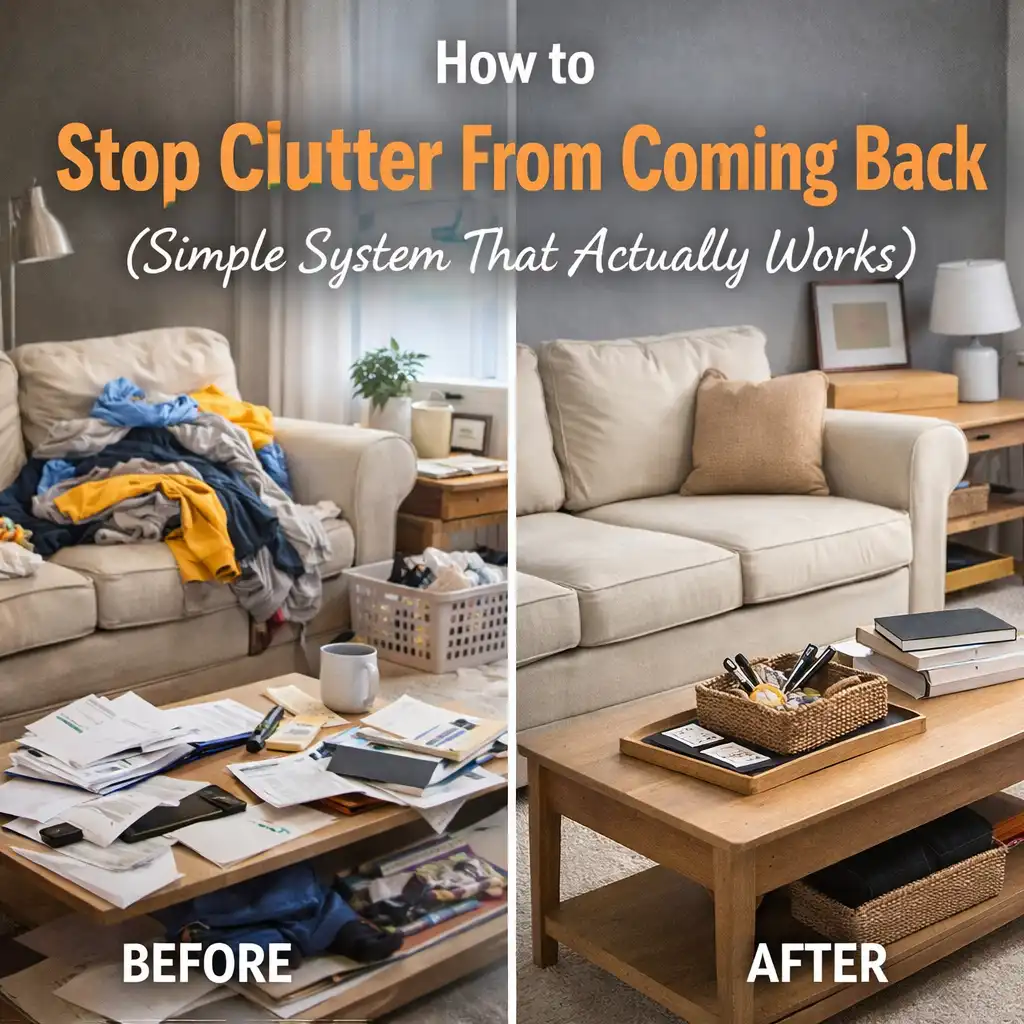
You’ve cleaned, organized, and decluttered your home… but somehow, the mess always comes back. This is one of the most common frustrations people face.
The truth is, clutter doesn’t return because you didn’t clean well enough — it comes back because there’s no system to stop it.
If you want lasting results, you need to change how clutter enters and moves through your home.
Why Clutter Keeps Coming Back
Most people focus only on cleaning, not prevention.
Clutter builds up because:
- new items constantly enter your home
- things don’t have a designated place
- habits don’t support organization
- small messes are ignored
Without a system, even the cleanest home will slowly return to chaos.
Step 1: Control What Comes Into Your Home
The easiest way to reduce clutter is to stop it before it starts.
Before bringing something new home, ask:
- Do I really need this?
- Where will I store it?
- What will I remove to make space?
This simple filter prevents unnecessary buildup.
Step 2: Use the “One In, One Out” Rule
Every time you buy or bring in something new, remove one item.
For example:
- new shirt → donate an old one
- new kitchen tool → remove unused one
This keeps your total number of items stable.
Step 3: Give Everything a Fixed Place
Clutter often happens because items don’t have a clear home.
Every item should have:
- a specific location
- easy access
- a logical place
If something doesn’t have a place, it becomes clutter.
Step 4: Reset Your Space Daily
A 5–10 minute reset each day makes a huge difference.
During this time:
- return items to their place
- clear surfaces
- fix small messes
This prevents clutter from building up.
Step 5: Avoid “Temporary Piles”
Many people create small piles:
- clothes on a chair
- papers on a table
- random items on counters
These quickly turn into bigger messes. Deal with items immediately instead.
Step 6: Create Simple Systems
Your organization system should be easy to follow.
Examples:
- basket for everyday items
- tray for keys and small objects
- drawer for frequently used items
If it’s too complicated, you won’t stick to it.
Step 7: Declutter Regularly
Even with a system, things accumulate over time.
Schedule:
- weekly quick declutter
- monthly deeper reset
This keeps everything under control.
Step 8: Change Your Habits, Not Just Your Space
The biggest difference comes from behavior.
- put things back immediately
- don’t delay small tasks
- stay consistent
Your habits determine whether clutter returns.
Common Mistakes to Avoid
- organizing without decluttering
- buying storage instead of reducing items
- ignoring daily maintenance
- keeping too many “just in case” items
Final Thoughts
A clutter-free home isn’t about cleaning more — it’s about creating systems that prevent mess from returning.
Once you control what comes in, assign everything a place, and build small daily habits, your home will stay organized naturally.