
Introduction
Most people try to organize their homes multiple times but never get lasting results. You clean, sort, and arrange everything, but after a few days or weeks, the mess slowly returns.
The problem is not that you don’t try hard enough. The real issue is that most organization systems are too complicated or unrealistic to maintain.
If you want your home to stay organized long-term, you need a system that is simple, practical, and easy to follow every day.
This guide will show you how to build exactly that.
Why Most Organization Systems Fail
Before creating a system that works, it’s important to understand why most fail.
The most common reasons include:
- systems are too complex
- storage is not practical
- items don’t have clear places
- habits are not aligned with the system
- too many unnecessary items
A system only works if you can maintain it without effort.
The Core Rule of Organization
The most important rule is simple:
Every item must have a clearly defined place.
If something doesn’t have a place:
- it will end up on random surfaces
- it will be moved constantly
- it will create clutter
Organization is not about storing things — it’s about creating structure.
Step 1: Remove Excess Before Organizing
Organization without decluttering does not work.
Before you organize anything:
- remove items you don’t use
- get rid of duplicates
- eliminate “just in case” items
The less you own, the easier everything becomes.
Step 2: Create Logical Zones
Divide your home into zones based on function.
Examples:
- kitchen → cooking, storage, cleaning
- living room → relaxation, entertainment
- bedroom → rest, clothing
Each zone should only contain items related to its purpose.
This prevents items from spreading everywhere.
Step 3: Store Items Where You Use Them
One of the biggest mistakes is storing things far from where they are used.
Instead:
- keep kitchen tools near the cooking area
- keep cleaning supplies where you clean
- keep daily items easily accessible
Convenience determines whether you stay organized.
Step 4: Make Storage Effortless
If putting something away requires effort, you won’t do it.
Good storage should be:
- easy to access
- quick to use
- simple to maintain
Avoid complicated systems that slow you down.
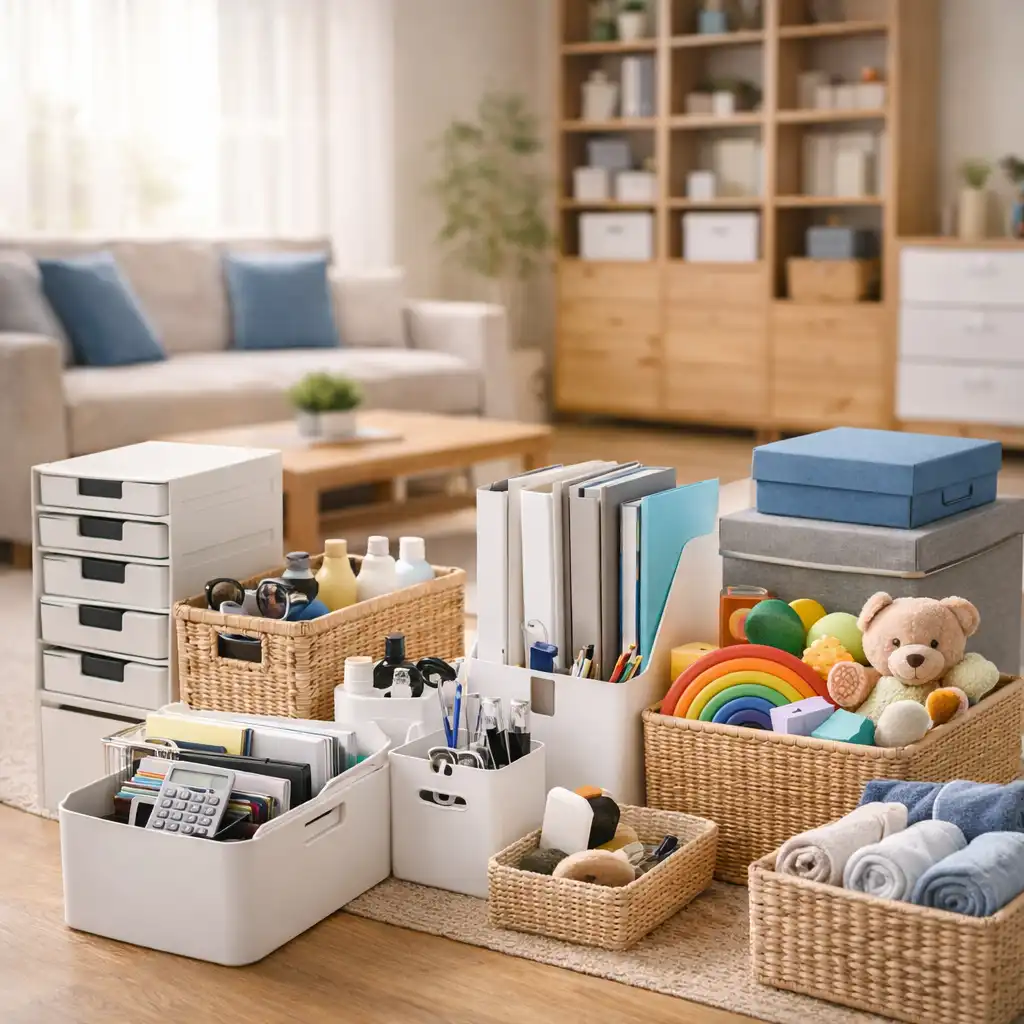
Step 5: Use Containers to Create Structure
Containers help control clutter and define space.
Use:
- baskets
- boxes
- drawer dividers
They:
- group similar items
- prevent spreading
- make spaces look clean
Step 6: Limit Each Category
Every category needs a limit.
For example:
- clothes should fit comfortably in your closet
- kitchen tools should fit in drawers without overflow
If something doesn’t fit, it means you have too much.
Step 7: Build Daily Reset Habits
No system works without maintenance.
Daily habits:
- put things back immediately
- clear surfaces at the end of the day
- do a quick reset
This keeps your system working automatically.
Step 8: Avoid Temporary Storage
Temporary piles quickly become permanent clutter.
Examples:
- chair full of clothes
- table with random items
- corner with boxes
Deal with items immediately instead of postponing.
Step 9: Design for Real Life, Not Perfection
Your home should work for your daily life, not look perfect all the time.
Avoid:
- over-organizing
- creating unrealistic systems
- focusing only on aesthetics
Functionality always comes first.
Step 10: Review and Adjust Regularly
Your needs change over time.
Once a month:
- review your system
- adjust storage
- remove unnecessary items
This keeps everything relevant and efficient.
Common Mistakes to Avoid
- organizing without decluttering
- buying storage before reducing items
- copying systems that don’t fit your lifestyle
- ignoring daily maintenance
Long-Term Results
When your system works:
- your home stays clean longer
- you spend less time cleaning
- you feel more in control
- your space feels calm and organized
Final Thoughts
A good organization system is not about perfection — it’s about simplicity and consistency.
When everything has a place, and your system matches your daily habits, your home stays organized naturally.
You don’t need more effort. You need a system that works with your life, not against it.