
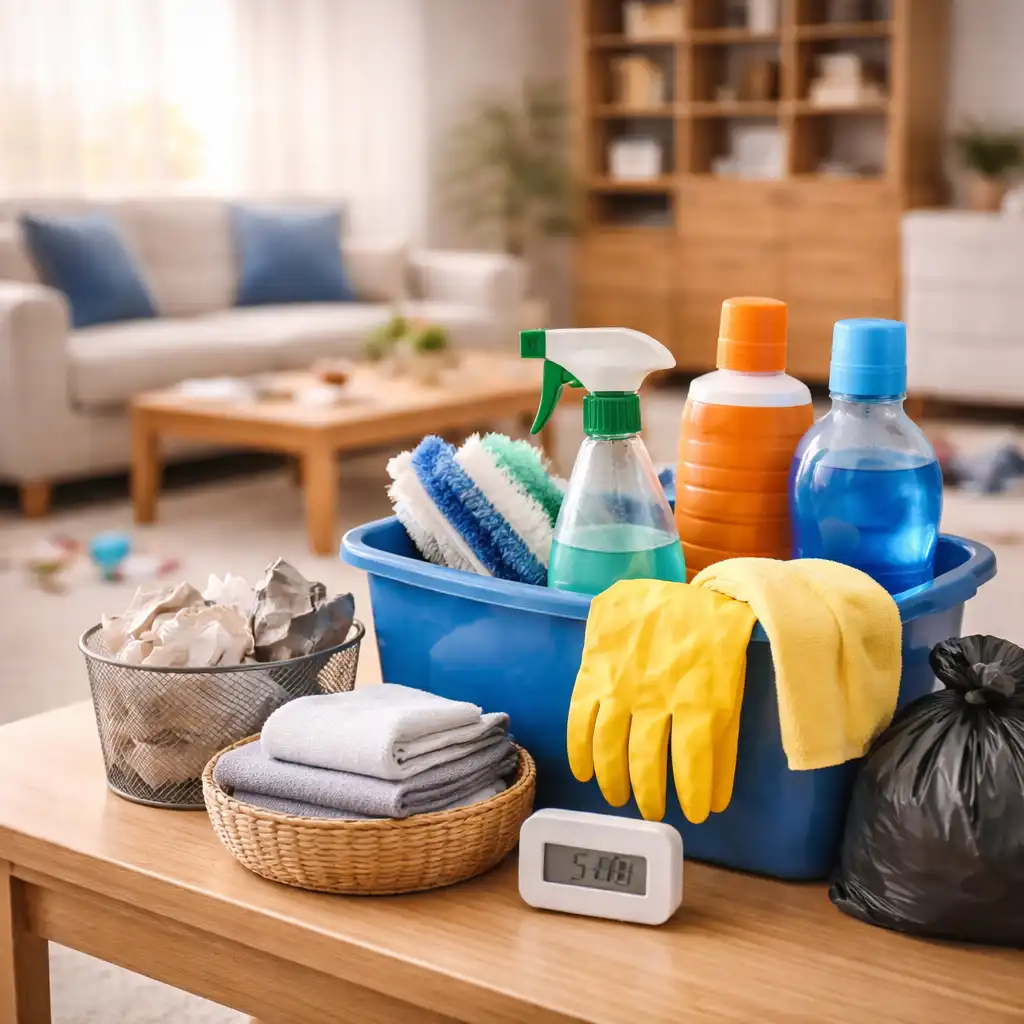
Introduction
There are days when cleaning feels impossible. You look around, see the mess, and know something needs to be done — but you just don’t have the energy or motivation to start.
This is completely normal.
The biggest mistake people make is waiting until they feel motivated. But motivation is unreliable. If you depend on it, your home will only stay clean occasionally.
The solution is not more discipline. It’s a system that works even when you don’t feel like doing anything.
Why You Feel Unmotivated to Clean
Before fixing the problem, it’s important to understand it.
Lack of motivation usually comes from:
- feeling overwhelmed by the mess
- not knowing where to start
- expecting too much from yourself
- associating cleaning with effort and stress
When everything feels like a big task, your brain avoids it completely.
The “Start Small” Principle
The most effective way to overcome resistance is to make the task feel easy.
Instead of thinking:
“I need to clean the whole apartment”
Think:
“I will clean one small thing”
Examples:
- one table
- one drawer
- one corner
Starting small reduces pressure and makes it easier to begin.
The 5-Minute Rule
This is one of the most powerful techniques.
Set a timer for 5 minutes and start cleaning.
That’s it.
After 5 minutes:
- you can stop
- or continue if you feel like it
Most of the time, starting is the hardest part. Once you begin, it becomes easier to keep going.
Focus on Visible Impact
When you have low motivation, results matter more than perfection.
Focus on areas that create immediate visual change:
- clearing surfaces
- making the bed
- removing clutter from the floor
This quickly makes your home feel cleaner and gives you a sense of progress.
Use the “One Task” Method
Don’t try to multitask.
Pick one simple task and complete it fully:
- collect trash
- put away clothes
- wipe surfaces
Finishing one task creates momentum.
Reduce Decision Fatigue
Cleaning becomes harder when you have to constantly decide what to do next.
Make it easier:
- follow the same routine every time
- clean in the same order
- use simple rules
Less thinking = more action.
Create a Simple Cleaning Flow
When motivation is low, follow this exact order:
- Throw away trash
- Put items back in place
- Wipe surfaces
- Do a quick floor reset
This structure removes confusion and speeds things up.
Remove Barriers to Action
Sometimes the problem is not motivation — it’s friction.
Examples:
- cleaning supplies are hard to reach
- tools are not ready
- tasks feel inconvenient
Fix it by:
- keeping supplies nearby
- simplifying your setup
- reducing steps
The easier it is, the more likely you are to start.
Accept “Good Enough”
Perfection kills motivation.
You don’t need a perfect home. You need a functional one.
Even small improvements:
- reduce stress
- make your space more comfortable
- build momentum
Done is always better than perfect.
Build a No-Motivation Routine
The goal is to clean even when you don’t feel like it.
Create a basic routine:
- 5–10 minutes daily
- same tasks each time
- no thinking required
Over time, it becomes automatic.
Use Environment to Your Advantage
Your environment affects your behavior.
Make it easier:
- keep surfaces clear
- reduce clutter
- simplify your space
A cleaner space requires less effort to maintain.
Common Mistakes to Avoid
- waiting for motivation
- trying to do everything at once
- overcomplicating the process
- focusing on perfection
These make cleaning harder than it needs to be.
Long-Term Results
When you use this system:
- cleaning becomes easier
- you start more often
- your home stays consistently cleaner
- stress decreases
You rely less on motivation and more on simple habits.
Final Thoughts
You don’t need motivation to clean your home.
You need a system that works without it.
When you start small, focus on impact, and remove friction, cleaning becomes something you can do anytime — even on your worst days.