
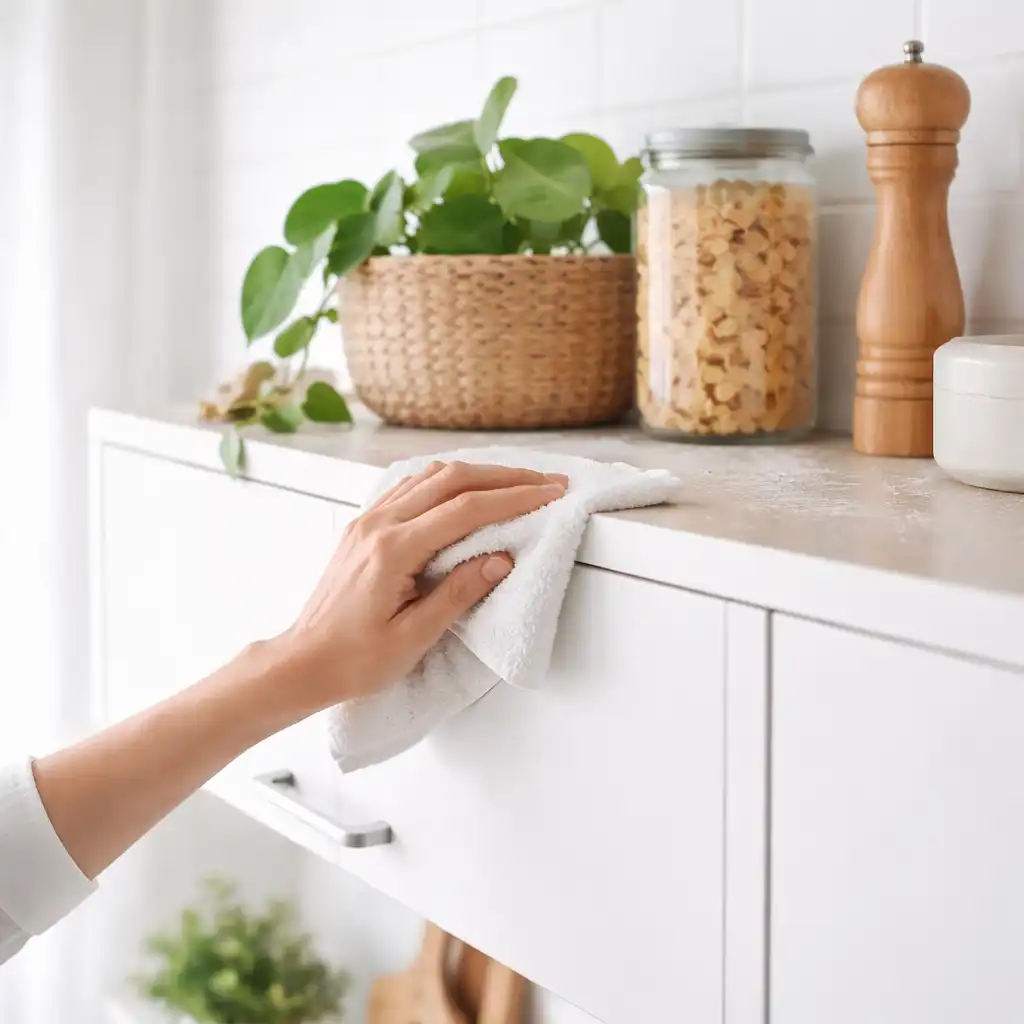
The kitchen may look spotless at first glance, but some of the dirtiest areas are often the ones you never think about. These overlooked surfaces quietly collect grease, dust, and bacteria over time, affecting both cleanliness and indoor air quality. Paying attention to these hidden spots can make a noticeable difference in how fresh your kitchen feels.
1. The Tops of Cabinets
Most people clean cabinet doors regularly, but the tops are often ignored for months or even years. This area collects a sticky layer of grease mixed with dust, especially in kitchens where cooking happens daily.
To clean it properly, use a degreasing solution or warm water with dish soap. Wipe thoroughly and dry the surface to prevent residue buildup. For easier maintenance, you can place a thin layer of paper or liner on top and replace it every few months.
2. Refrigerator Door Seals
The rubber gasket around your refrigerator door traps crumbs, moisture, and sometimes mold. Because it folds inward, dirt can stay hidden until it starts to smell.
Use a soft brush or cloth with mild soap to clean between the folds. Dry it completely to prevent mildew. Keeping this area clean also helps your fridge seal properly and run more efficiently.
3. Under Small Appliances
Toasters, coffee makers, and blenders often stay in one place for long periods. Underneath them, crumbs, grease, and dust accumulate unnoticed.
Once a week, move these appliances and wipe the surface beneath them. This simple habit prevents buildup and keeps pests away.
4. Sink Faucet Base
Even if the sink itself is clean, the base of the faucet can develop mineral deposits and grime from constant water exposure. Over time, this area may look dull or even develop a ring of buildup.
Use a mixture of vinegar and water to dissolve mineral residue. For stubborn spots, let the solution sit for a few minutes before wiping clean.
5. Light Switches and Handles
These are high-touch areas that collect bacteria quickly. In the kitchen, they often get coated with grease from hands during cooking.
Wipe them down regularly with a disinfecting cloth. This small step significantly reduces the spread of germs in your home.
6. Range Hood Filters
Range hood filters trap grease from cooking fumes. If not cleaned regularly, they become clogged and less effective.
Remove the filters and soak them in hot water with dish soap or baking soda. Scrub gently and let them dry before reinstalling. Clean filters improve air circulation and reduce lingering odors.
7. Trash Can Exterior
While most people focus on the inside of the trash can, the outside—especially the lid—can be just as dirty. Hands touch it frequently, transferring bacteria and food residue.
Wipe the exterior with disinfectant and wash it occasionally with warm soapy water. A clean trash can helps eliminate unwanted smells.
Conclusion
A truly clean kitchen goes beyond visible surfaces. By paying attention to these often-forgotten areas, you can create a healthier and more comfortable environment. Small, consistent efforts prevent buildup and make deep cleaning much easier over time.